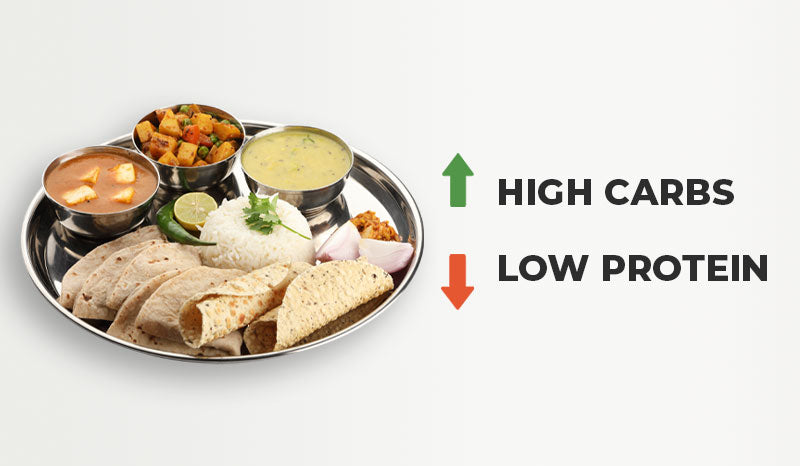
Nutrition Surveys Highlight Low Protein Intake Among Indians
When Dr. Hemalatha, Director of the Indian Council of Medical Research-National Institute of Nutrition (ICMR-NIN), released the groundbreaking "What India Eats" report in 2020, it painted a sobering picture of the Indian diet.
Based on comprehensive data from the National Nutrition Monitoring Bureau (NNMB) and other nutrition surveys spanning decades, the findings revealed what nutrition scientists had long suspected: Indians aren't getting enough protein.
But the numbers are even more alarming than most people realize.
The Data Doesn't Lie: A Nation Running on Low Protein
Multiple large-scale nutrition surveys conducted across India have consistently highlighted a troubling pattern of inadequate protein consumption:
The "What India Eats" Report (ICMR-NIN 2020)
This landmark report, analyzing dietary data from adults across urban and rural India, revealed:
Urban India:
- Average daily intake: 55.4g protein
- Average daily energy: 1,943 kcal
- Protein contributes only 11.4% of total calories
Rural India:
- Average daily intake: 69g protein
- Average daily energy: 2,081 kcal
- Protein contributes only 13.2% of total calories
While these numbers might seem adequate at first glance, they mask a deeper problem: protein quality.
The Quality Problem: Not All Protein Is Created Equal
Perhaps the most concerning finding from the NNMB surveys is not just how much protein Indians consume, but where it comes from:
- 60-75% of protein intake comes from cereals (rice, wheat, and other grains)
- Only 15-20% comes from legumes (dal, beans, pulses)
- A mere 5-10% comes from dairy, eggs, meat, and fish combined
Why does this matter? Because cereal proteins are low-quality proteins with poor digestibility and incomplete amino acid profiles.
According to British Journal of Nutrition research analyzing NNMB data, when protein quality is assessed using the Protein Digestibility Corrected Amino Acid Score (PDCAAS)—which factors in digestibility and essential amino acid content—all Indian populations, particularly rural and tribal communities, show inadequate protein quality intake.
In simple terms: even when Indians meet their protein quantity targets, they're falling short on protein quality.
The Declining Trend: Getting Worse, Not Better
Data from consecutive NNMB surveys reveals a disturbing trend—protein consumption in India has been declining over time:
Decline in Rural Areas (1995-2005):
- Men: 7g/day decrease
- Women: 6g/day decrease
- This represents approximately 10% drop in protein intake
Decline in Pulse Consumption: Despite pulses being a major protein source in Indian vegetarian diets, their consumption has fallen substantially due to:
- Soaring costs making them unaffordable for many
- Poor people spending more on pulses but getting less quantity
- Shift toward cheaper cereal-based foods
No Improvement in Milk Consumption: Although India's milk production has increased massively, per capita consumption hasn't improved correspondingly—the increased supply hasn't translated into increased consumption, especially among lower-income groups.
The ICMR-INDIAB Study: Protein and Metabolic Health
The recent Indian Council of Medical Research-India Diabetes (ICMR-INDIAB) survey of 18,090 adults across India provided crucial insights into how our low-protein, high-carbohydrate diet affects metabolic health:
Current Macronutrient Distribution
Indian adults currently consume:
- 65-75% of calories from carbohydrates (one of the highest in the world)
- 9-11% of calories from protein (significantly lower than recommended)
- 14-23% of calories from fats
Published in Nature Medicine (2025), the study found that this carbohydrate-heavy diet is associated with:
- 14-30% higher cardiometabolic risk
- Increased likelihood of Type 2 diabetes
- Higher rates of prediabetes
- Greater risk of cardiovascular disease
The Good News: Protein Can Help
The same study demonstrated that substituting just 5% of energy from carbohydrates with protein significantly reduced diabetes risk:
- Dairy protein substitution: 11% lower odds of diabetes
- Plant protein substitution: 9% lower odds of diabetes
- Egg protein substitution: 9% lower odds of diabetes
- Fish protein substitution: Lower diabetes risk
This evidence-based finding provides a clear public health strategy: reduce carbohydrates, increase protein.
Regional Variations: Not All States Are Equal
NNMB surveys spanning ten states revealed significant regional differences in protein consumption:
States with Higher Protein Intake:
- Northern states showed slightly higher protein consumption
- Urban areas in metro cities had better protein diversity
- States with dairy farming traditions showed better milk consumption
States with Lower Protein Intake:
- Eastern and northeastern states showed deficits
- Tribal populations had the poorest protein quality
- Rural areas in semi-arid regions showed chronic inadequacy
A 2025 study in the semi-arid tropics found that 80% of households consumed less protein than recommended, with average intake ranging from just 38-52g per day per consumption unit.
Who's Most Affected? The Protein Gap Across Demographics
By Gender
Women consistently show lower protein intake than men:
- Cultural practices of women eating last
- Smaller portions served to women
- Higher protein needs during pregnancy/lactation often unmet
- Greater prevalence of protein-related health issues (anemia, muscle loss)
By Age
Children and Adolescents:
- Rapid growth increases protein needs
- Prevalence of stunting linked to inadequate protein
- Poor muscle development affecting long-term health
Elderly (≥60 years):
- ICMR-NIN 2020 RDA: Men need 54g/day, women need 45.7g/day
- Many elderly consume far less due to reduced appetite
- Accelerated muscle loss (sarcopenia) from protein deficiency
- Increased frailty and fracture risk
By Socioeconomic Status
Lower-Income Households:
- Protein-rich foods remain unaffordable
- Heavy reliance on subsidized cereals through PDS
- Limited access to diverse protein sources
- Lower nutrition awareness
Middle and Upper-Income Groups: Despite affordability, many still fall short due to:
- Lack of awareness about protein requirements
- Traditional dietary patterns centered on cereals
- Misconceptions about protein (weight gain, kidney damage)
- Not tracking or monitoring protein intake
The Urban Protein Paradox
A 2024 survey by LocalCircles and Country Delight covering 25 urban districts revealed startling findings:
- Only 4 out of 10 urban Indians regularly include high-protein sources (eggs, lentils, milk, paneer, nuts, fish) in daily meals
- 74% couldn't correctly identify the recommended daily protein intake for adults
- 85% don't track or estimate their daily protein consumption
- 50% remain unaware of protein's role in muscle strength, immunity, and energy
Even in cities with access to diverse foods, awareness and consumption remain inadequate.
What the Updated Guidelines Tell Us
ICMR-NIN 2020 Recommendations
The latest nutrient requirement guidelines introduced important changes:
New RDA for Protein:
- 0.83g per kg body weight per day (reduced from 1g/kg in 2010 guidelines)
- EAR (Estimated Average Requirement): 0.66g per kg body weight
Important caveat: For people consuming cereal-based diets with low-quality protein (most Indians), the requirement remains 1g per kg body weight per day.
Improved Diet Composition: The recommended Cereal-Legume-Milk (CLM) ratio changed from 11:1:3 to 3:1:2.5—meaning:
- Reduce cereal proportion
- Increase legume consumption
- Significantly increase milk/dairy products
This new ratio aims to improve overall protein quality in Indian diets.
What This Means for Average Indians
For a 60kg adult:
- Minimum requirement (EAR): 39.6g/day
- Recommended intake (RDA): 49.8g/day
- For cereal-heavy diet: 60g/day
For a 70kg adult:
- Minimum requirement (EAR): 46.2g/day
- Recommended intake (RDA): 58.1g/day
- For cereal-heavy diet: 70g/day
Most Indians consuming cereal-based diets need more protein than they're currently getting, even by the updated (lower) standards.
The Health Consequences: What Low Protein Intake Means
Decades of NNMB data have documented the health impacts of chronic protein inadequacy:
Documented Effects
In Children:
- High rates of stunting (under-height for age)
- Protein-energy malnutrition
- Impaired cognitive development
- Weakened immunity leading to frequent infections
In Adults:
- 71% of Indians aged 30-55 have poor muscle health
- Widespread chronic energy deficiency
- Increased susceptibility to infections
- Poor wound healing
- Hair loss and brittle nails
In Pregnant and Lactating Women:
- 83.7% show protein deficiency
- Higher rates of low birth weight babies
- Maternal malnutrition affecting fetal development
- Inadequate milk production during lactation
Metabolic Consequences:
- Increased diabetes risk (42 million Indians affected)
- Higher cardiovascular disease rates
- Obesity with muscle loss ("skinny fat" syndrome)
- Poor metabolic health markers
Why Aren't Indians Getting Enough Protein?
The nutrition surveys have identified multiple barriers:
1. Economic Constraints
- Protein-rich foods cost more than cereals
- PDS provides subsidized cereals but minimal protein
- Pulse prices remain prohibitively high for many
- Animal proteins unaffordable for lower-income groups
2. Lack of Awareness
- 90% unaware of daily protein requirements
- Widespread myths about protein (weight gain, kidney damage)
- Limited understanding of protein quality
- No tracking or monitoring of protein intake
3. Cultural and Dietary Patterns
- Traditional meals centered on rice/roti
- Small portions of dal relative to cereals
- Women eating last, getting least
- Vegetarianism without proper protein planning
4. Policy Gaps
- National nutrition programs focus on cereals
- Limited protein supplementation in government schemes
- PDS provides only 7.2g protein/day (rural) and 3.8g/day (urban)
- Inadequate nutrition education and awareness campaigns
Solutions Emerging from Survey Data
Based on comprehensive survey findings, nutrition experts recommend:
1. Individual Level Changes
Increase Protein-Rich Foods:
- Include dal/legumes at every meal (1-1.5 cups cooked)
- Add dairy products (milk, curd, paneer) daily
- For non-vegetarians: eggs, fish, chicken
- Combine plant proteins for complete amino acid profiles
Follow the 3:1:2.5 CLM Ratio:
- 3 parts cereals: 1 part legumes: 2.5 parts milk/dairy
- This ensures better protein quality
- Provides essential amino acids
- Improves overall nutrient intake
Track Your Protein:
- Calculate your requirement (0.83-1g per kg body weight)
- Monitor daily intake
- Adjust portions to meet targets
2. Policy Recommendations
Expand PDS to Include Protein:
- Add pulses to subsidized distribution (like Andhra Pradesh, Telangana)
- Include fortified foods with better protein quality
- Provide protein supplementation for vulnerable groups
Nutrition Education Campaigns:
- Public awareness on protein requirements
- Myth-busting around protein consumption
- Teaching protein quality concepts
- Empowering women with nutrition knowledge
Agricultural Support:
- Increase pulse production and availability
- Make protein-rich foods more affordable
- Support dairy farming and accessibility
- Promote nutrition-sensitive agriculture
3. Targeted Interventions
For High-Risk Groups:
- Pregnant and lactating women: Additional 23-19g protein/day
- Elderly: Focus on preventing sarcopenia
- Children: Ensure adequate protein for growth
- Low-income households: Subsidized protein access
The Path Forward: Insights from Survey Data
The comprehensive nutrition surveys conducted by ICMR-NIN, NNMB, NSSO, and other agencies over decades provide us with invaluable insights. The data is clear:
- Indians consume inadequate protein in both quantity and quality
- Protein intake has been declining, not improving
- The protein gap affects all demographics, but especially women, children, the elderly, and lower-income groups
- Health consequences are significant and measurable
- Solutions exist and are evidence-based
The recent Nature Medicine study offers hope: even small changes—substituting just 5% of carbohydrate calories with protein—can significantly reduce metabolic disease risk.
What You Can Do Today
Armed with this knowledge from national nutrition surveys, here's what you can do:
Assess Your Intake:
- Calculate your protein requirement (multiply your weight in kg by 0.83-1)
- Track what you actually eat for 3 days
- Identify your protein gap
Make Strategic Changes:
- Increase dal portions (from 1/2 cup to 1-1.5 cups per meal)
- Add a protein source to breakfast (eggs, paneer, Greek yogurt)
- Include milk or curd with meals
- For vegetarians: combine cereals + legumes + dairy
Spread Awareness:
- Share this information with family and friends
- Educate others about protein requirements
- Challenge myths and misconceptions
- Support policy changes for better nutrition programs
Consider Quality Supplementation:
- If dietary intake consistently falls short
- During high-need periods (pregnancy, illness, aging)
- Choose reputable brands
- Consult healthcare professionals
The Bottom Line
The data from India's nutrition surveys tells an unambiguous story: we have a protein problem. From the NNMB surveys tracking trends since 1975 to the recent ICMR-INDIAB study of 18,090 adults, the evidence consistently shows that Indians aren't getting enough protein—in either quantity or quality.
But data also empowers change. Now that we know the problem, we can address it. As individuals, we can make better dietary choices. As a society, we can advocate for policies that make protein-rich foods more accessible. As a nation, we can use this evidence to build a healthier future.
The surveys have given us the roadmap. It's time to act on it.
References
- Hemalatha, R., Laxmaiah, A., Sriswan, M. R., Boiroju, N. V., & Radhakrishna, K. V. (2020). What India Eats (ICMR & NIN, 2020). Indian Council of Medical Research - National Institute of Nutrition. Retrieved from https://www.nin.res.in/nutrition2020/what_india_eats.pdf
- Anjana, R. M., et al. (2025). Dietary profiles and associated metabolic risk factors in India from the ICMR–INDIAB survey-21. Nature Medicine. https://doi.org/10.1038/s41591-025-03949-4. Retrieved from https://www.nature.com/articles/s41591-025-03949-4
- ICMR-National Institute of Nutrition. (2021). Research Highlights 2020-21. Retrieved from https://www.nin.res.in/researchhighlights/2020-21.pdf
- Indian Council of Medical Research - National Institute of Nutrition. (2020). Nutrient Requirements for Indians - A Brief Note on RDA and EAR 2020. Retrieved from https://www.nin.res.in/rdabook/brief_note.pdf
- Hemalatha, R. (2018). National Institute of Nutrition: 100 years of empowering the nation through nutrition. Indian Journal of Medical Research. PMC. Retrieved from https://pmc.ncbi.nlm.nih.gov/articles/PMC6366263/
- Food and Agriculture Organization. Dietary intake data from nutrition surveys. Retrieved from https://www.fao.org/4/a0442e/a0442e0e.htm
- ILSI India. NNMB Nutrition surveys: Assessment Methods. Retrieved from https://www.ilsi-india.org/Workshop_National_Food_Consumption_Anthropometry_Physical_Activity_Survey/Methodology.pdf
- Kurpad, A. V., et al. (2012). Protein intakes in India. British Journal of Nutrition, Cambridge Core. https://doi.org/10.1017/S0007114512002140. Retrieved from https://www.cambridge.org/core/journals/british-journal-of-nutrition/article/protein-intakes-in-india/E4D9E34413FA06FF57844888FC6084C3
- Frontiers in Sustainable Food Systems. (2025). Links between protein-source diversity, household behavior, and protein consumption inadequacy in the Indian rural semi-arid tropics. Retrieved from https://www.frontiersin.org/journals/sustainable-food-systems/articles/10.3389/fsufs.2025.1490050/full
- OC Academy. (2024). Protein Deficiency in India: Causes, ICMR RDA, and Health Impact. Retrieved from https://www.ocacademy.in/blogs/protein-deficiency-urban-india-icmr-guide/
- Nature Medicine. (2025). Rethinking India's plate to improve metabolic health. https://doi.org/10.1038/s41591-025-04016-8. Retrieved from https://www.nature.com/articles/s41591-025-04016-8
- Metabolic Health Digest. (2021). Nutrient requirements for Indians – ICMR-NIN, 2020. Retrieved from https://metabolichealthdigest.com/nutrient-requirements-for-indians-icmr-nin-2020/
- Clinical Nutrition ESPEN. (2023). To Evaluate Dietary Protein Intake As Per Recommended Dietary Allowance (RDA 2020) And Correlate It With The Malnutrition Universal Screening Tool Score (MUST) In Urban Indians Aged 40-60 Years. Retrieved from https://www.clinicalnutritionespen.com/article/S2405-4577(22)00740-9/fulltext
- Indian Council of Medical Research. Nutrition. Retrieved from https://www.icmr.gov.in/nutrition
- ICMR-National Institute of Nutrition, India. Retrieved from https://www.nin.res.in/
- National Family Health Survey (NFHS-5), 2019-21. Ministry of Health and Family Welfare, Government of India. International Institute for Population Sciences (IIPS).
- National Sample Survey Office (NSSO). (2014). Nutritional Intake in India, 2011-12, 68th Round. Ministry of Statistics and Programme Implementation, Government of India.
- Right To Protein Initiative. India's Protein Paradox Study. Retrieved from https://righttoprotein.com/assets/pdf/Indias-Protein-Paradox-Study.pdf
- Observer Research Foundation. (2024). India's protein deficiency and the need to address the problem. Retrieved from https://www.orfonline.org/expert-speak/indias-protein-deficiency-and-the-need-to-address-the-problem
- Anjana, R. M., et al. (2011). The Indian Council of Medical Research—India Diabetes (ICMR-INDIAB) study: methodological details. Journal of Diabetes Science and Technology, 5, 906–914.