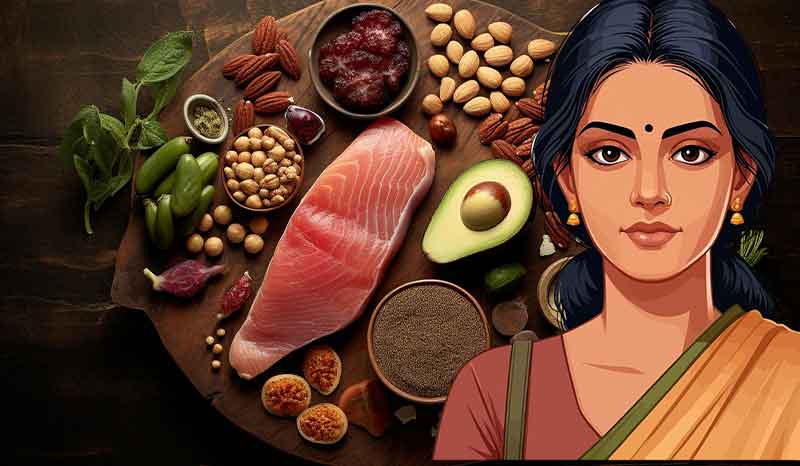
The Hidden Protein Gap in Indian Women
Across India, millions of women face a silent nutritional crisis that rarely makes headlines: severe protein deficiency.
While the country debates food security, agricultural policies, and malnutrition in children, a critical gap persists - Indian women, from adolescence through their reproductive years and beyond, are systematically deprived of adequate protein.
This isn't just about hunger; it's about gender, culture, economics, and a deeply entrenched system that consistently places women's nutritional needs last on the priority list.
The Shocking Statistics: A Crisis in Numbers
The numbers paint a disturbing picture of protein deficiency among Indian women:
- 73% of Indians are protein deficient, with women disproportionately affected
- Over 90% of Indians are unaware of their daily protein requirements
- 57% of women aged 15-49 years suffer from anemia (NFHS-5, 2019-21), up from 53% in 2015-16
- 83.7% of pregnant women in low-income urban areas show protein deficiency
- Nearly 60% of pregnant women in the poorest households do not regularly consume protein-rich foods like dairy, eggs, fish, or meat
- 80% of rural households consume less protein than recommended, with women receiving the smallest share
- In about 25% of Indian households, women are expected to eat after men have finished their meals
These aren't just statistics—they represent millions of women living with chronic fatigue, compromised immunity, poor muscle health, and increased vulnerability to diseases. The consequences ripple across generations, affecting not just the women themselves but also the children they bear and nurture.
Why Indian Women Face a Unique Protein Crisis
1. Cultural Practices: The "Eating Last" Phenomenon
One of the most insidious factors contributing to protein deficiency among Indian women is the deeply rooted cultural practice of women eating last in the household.
Research shows that in approximately one-quarter of Indian households, women are expected to have their meals only after men have finished eating.
This practice has profound nutritional implications:
Quantity and Quality Deprivation: When women eat last, they often receive:
- Smaller portions of food
- Lower-quality protein sources
- The remnants after family members have eaten their fill
- In protein-scarce households, sometimes no protein at all
The Mental Health Connection: Studies have found that this practice is associated with worse mental health outcomes for women, even after accounting for socioeconomic status. The discrimination manifests as both physical malnutrition and psychological distress, with women reporting lower autonomy and self-worth.
Intergenerational Transmission: This pattern extends beyond adult women. Research reveals that in 28% of households in educationally backward areas, girls are made to eat after boys, perpetuating the cycle from childhood.
A 2021 study in Bihar, Jharkhand, and Maharashtra found that women who eat last are significantly more likely to be underweight at all levels of household expenditure, demonstrating that this is a cultural problem transcending economic barriers.
2. Cereal-Heavy, Protein-Poor Diets
Indian diets are overwhelmingly cereal-based, with rice and wheat dominating plates across the country. While these provide calories, they offer poor-quality protein:
- 60% of protein in Indian diets comes from cereals
- Cereal proteins rank lowest on the Digestible Indispensable Amino Acid Score (DIAAS), making them inferior protein sources
- Even when households have access to protein-rich foods, consumption remains inadequate
The Rural-Urban Divide: The National Sample Survey 2011-12 documented a decline in per capita protein consumption in both urban (4%) and rural (11%) areas, with rural women particularly affected due to:
- Limited access to diverse protein sources
- Greater dependence on subsistence farming
- Cultural taboos around certain protein-rich foods
- Economic constraints
3. Economic Constraints and Household Decision-Making
Protein-rich foods—dairy, legumes, eggs, fish, and meat—are more expensive than staple cereals. For poor households, these foods become luxury items:
Cost Barriers: Studies show that protein-rich foods remain unaffordable for many Indian families. NFHS-4 and NFHS-5 data reveal that over 40% of the poorest adults and nearly 60% of pregnant women do not regularly consume dairy, eggs, fish, or meat.
Women's Limited Economic Agency: When women lack control over household finances and food purchases, their nutritional needs are often deprioritized. Research indicates that households where women have higher education levels and greater decision-making power consume more balanced, protein-rich diets. Conversely, when women have limited autonomy, protein deficiency becomes more severe.
The Indian Consumer Market 2020 shows that only one-third of the food budget in Indian households is spent on protein-rich foods, with the majority going to cereals and processed foods.
4. The Vegetarian Diet Challenge
With 39% of Indians identifying as vegetarian and 81% avoiding meat or eggs, cultural and religious dietary restrictions significantly impact protein intake, especially for women:
Incomplete Proteins: Most plant-based proteins are "incomplete," meaning they lack one or more essential amino acids that the body cannot produce on its own. While combinations like dal-rice or rajma-chawal can provide complete protein profiles, many women don't consume adequate quantities.
Micronutrient Deficiencies: Vegetarian diets, when poorly planned, lack not only protein but also iron, vitamin B12, zinc, and other nutrients critical for women's health. This compounds the protein deficiency crisis, leading to severe anemia and compromised immunity.
The "Pure vs. Impure" Food Hierarchy: In some communities, women living in vegetarian households cannot consume animal protein even if they wish to, as it implies ritual impurity. This restriction particularly affects women from certain castes and regions.
5. Increased Protein Demands During Critical Life Stages
Women's protein requirements increase dramatically during key life stages, yet their intake often decreases:
Adolescence: During puberty, when girls need protein for growth, menstruation, and development, their intake frequently drops due to:
- Son preference leading to better food for male children
- Dietary restrictions and fasting for marriage prospects
- Early malnutrition affecting long-term health
Pregnancy: Pregnant women need an additional 23 grams of protein daily, yet:
- 83.7% of pregnant women in low-income urban areas have protein deficits
- 52.2% of pregnant women suffer from anemia
- Median protein deficit among pregnant women is 22.9 g/kg/day
- 95% have calorie deficits despite consuming diverse foods
Lactation: Breastfeeding mothers require an additional 19 grams of protein daily to produce adequate milk without depleting their own reserves. Yet:
- 63% of lactating women suffer from anemia (highest among all groups)
- Women often fail to consume additional food needed during lactation
- Gender bias means male children receive longer breastfeeding duration than female children
6. The "Invisible" Nature of Protein Deficiency
Unlike starvation or acute malnutrition, protein deficiency often goes unnoticed because:
Misconceptions Abound:
- 85% of Indians believe protein leads to weight gain
- Over 90% are unaware of daily protein requirements
- Myths about protein causing kidney damage and hair loss persist
- Confusion between protein-rich foods and protein supplements
Policy Blindspots: Government nutrition programs like the Public Distribution System (PDS), Integrated Child Development Services (ICDS), and Mid Day Meal Schemes provide primarily cereals, with minimal protein supplementation:
- PDS protein supplementation averages only 7.2 gm/day in rural areas and 3.8 gm/day in urban areas
- Most safety net programs provide no protein-rich foods
- Recommended dietary allowances remain unmet for the poorest households
Data Gaps: Many nutrition surveys don't adequately capture gender-specific protein deficiency, focusing instead on general calorie intake or child malnutrition.
The Health Consequences: Beyond Anemia
The protein gap in Indian women manifests through a cascade of health problems:
1. Widespread Anemia
Anemia affects 57% of women of reproductive age in India, with even higher rates among:
- Pregnant women (52.2%)
- Lactating women (63%)
- Adolescent girls (59.1%)
- Women in aspirational districts (61.1%)
The Protein Connection: While iron deficiency is the primary cause of anemia, protein deficiency:
- Impairs iron absorption and transport
- Reduces hemoglobin production
- Weakens immune function, making women more susceptible to infections that exacerbate anemia
- Creates a vicious cycle of malnutrition and disease
2. Poor Muscle Health
A study across eight Indian cities found that 71% of individuals aged 30-55 years suffer from poor muscle health, with women disproportionately affected. Protein deficiency leads to:
- Muscle wasting and weakness
- Reduced physical strength and endurance
- Higher risk of falls and fractures in older women
- Decreased metabolic rate and easier weight gain
3. Maternal and Child Health Complications
Protein-deficient mothers face:
- Higher risk of preterm birth
- Low birth weight babies
- Stillbirths
- Maternal mortality
- Impaired lactation
- Postpartum depression
Intergenerational Impact: Malnourished mothers give birth to malnourished children, perpetuating cycles of:
- Stunting (affecting 38% of Indian children under five)
- Impaired cognitive development
- Weakened immunity
- Poor school performance
4. Compromised Immunity
Protein is essential for producing antibodies, immune cells, and inflammatory responses. Women with protein deficiency experience:
- Frequent infections
- Slower wound healing
- Greater susceptibility to tuberculosis, pneumonia, and other diseases
- Reduced effectiveness of vaccinations
5. Mental Health Impact
Beyond physical health, protein deficiency affects:
- Cognitive function and concentration
- Mood regulation (proteins are precursors to neurotransmitters)
- Energy levels and productivity
- Mental wellbeing, compounded by the social discrimination inherent in practices like eating last
Breaking the Cycle: What Can Be Done
Addressing the hidden protein gap requires action at multiple levels:
Individual and Household Level
For Women:
- Become aware of daily protein requirements (46-55g for adult women, more during pregnancy/lactation)
- Prioritize protein-rich foods: dal, rajma, chana, paneer, eggs, milk, fish
- Combine incomplete plant proteins (dal + rice, roti + curd) for complete amino acid profiles
- Speak up about nutritional needs within families
For Families:
- Challenge the practice of women eating last
- Ensure equal distribution of protein-rich foods
- Educate family members about women's heightened protein needs during pregnancy and lactation
- Include daughters equally in nutritious food allocation
A Path Forward: Protein for All
India's hidden protein crisis among women is not inevitable. It stems from changeable factors: cultural practices, economic inequalities, policy blindspots, and lack of awareness. Addressing it requires acknowledging that women's nutrition matters—not just for producing healthy children, but for women's own health, productivity, dignity, and wellbeing.
Every dal added to a woman's plate, every egg she consumes, every glass of milk she drinks, and every time she eats alongside—not after—her family represents progress toward a more equitable, healthier India. The hidden protein gap must be brought into the light, and then systematically dismantled through policy, education, economic empowerment, and cultural transformation.
Women's protein needs are not optional. They are essential—for the women themselves, and for the future of India.
References
- Frontiers in Sustainable Food Systems. (2025). Links between protein-source diversity, household behavior, and protein consumption inadequacy in the Indian rural semi-arid tropics. Retrieved from https://www.frontiersin.org/journals/sustainable-food-systems/articles/10.3389/fsufs.2025.1490050/full
- Jain, A., Sharma, S., Kim, R., & Subramanian, S. V. (2023). Food deprivation among adults in India: an analysis of specific food categories, 2016–2021. eClinicalMedicine. Retrieved from https://pmc.ncbi.nlm.nih.gov/articles/PMC10679480/
- ICRISAT Press Release. (2025). Invisible Malnutrition: Protein Deficiency Plagues Rural India Despite Availability and Affordability. Retrieved from https://pressroom.icrisat.org/hidden-hunger-protein-deficiency-plagues-rural-india-despite-availability-and-affordability
- Somashekhar, R. et al. (2023). Protein Paradox in India: Unraveling the Crisis, Debunking Myths. Proceedings of the International Conference on Advances in Nano-Neuro-Bio-Quantum (ICAN 2023). Retrieved from https://www.atlantis-press.com/article/125994349.pdf
- Kurpad, A. V., et al. (2012). Protein intakes in India. PubMed. Retrieved from https://pubmed.ncbi.nlm.nih.gov/23107548/
- Minocha, S., Thomas, T., & Kurpad, A. V. (2017). Dietary Protein and the Health-Nutrition-Agriculture Connection in India. The Journal of Nutrition, 147(7), 1243-1250. Retrieved from https://www.sciencedirect.com/science/article/pii/S0022316622162796
- Observer Research Foundation. (2024). India's protein deficiency and the need to address the problem. Retrieved from https://www.orfonline.org/expert-speak/indias-protein-deficiency-and-the-need-to-address-the-problem
- Yadav, R., et al. (2021). Calorie- and Protein-Deficient Diets Despite Adequate Dietary Diversity among Pregnant Women in a Low-Income Urban Area in Delhi, India. PMC. Retrieved from https://pmc.ncbi.nlm.nih.gov/articles/PMC9891045/
- P4i. (2025). Protein Deficiency And India's Nutrition Crisis. Retrieved from https://p4i.net/protein-deficiency-and-indias-nutrition-crisis/
- Right To Protein Initiative. India's Protein Paradox Study. Retrieved from https://righttoprotein.com/assets/pdf/Indias-Protein-Paradox-Study.pdf
- Let, R., et al. (2024). Prevalence and determinants of anaemia among women of reproductive age in Aspirational Districts of India: an analysis of NFHS 4 and NFHS 5 data. BMC Public Health. Retrieved from https://bmcpublichealth.biomedcentral.com/articles/10.1186/s12889-024-17789-3
- Ministry of Health and Family Welfare, Government of India. (2022). Press Information Bureau - Anaemia Prevalence Data. Retrieved from https://www.pib.gov.in/PressReleasePage.aspx?PRID=1795421
- Sahrawat, N., Sodhi, A.K., & Mishra, S.S. (2023). Status of Anaemia amongst women in India: trend analysis of NFHS data. Indian Journal of Community Health, 35(3), 354-358. Retrieved from https://www.iapsmupuk.org/journal/index.php/IJCH/article/view/2523
- Frontiers in Nutrition. (2025). Unveiling the hidden story of anemia among Indian Muslim women: a comprehensive analysis from 1998 to 2021. Retrieved from https://www.frontiersin.org/journals/nutrition/articles/10.3389/fnut.2025.1592436/full
- Siddiqui, M.Z., et al. (2017). Prevalence of Anemia and Its Determinants Among Pregnant, Lactating, and Nonpregnant Nonlactating Women in India. SAGE Journals. Retrieved from https://journals.sagepub.com/doi/10.1177/2158244017725555
- Rahman, S.S., & Talukdar, R. (2025). Decomposition Analysis of Anemia Among Women of Reproductive Age in Northeast India: Evidence from NFHS-4 and NFHS-5. National Journal of Community Medicine, 16(06), 589-597. Retrieved from https://njcmindia.com/index.php/file/article/view/5384
- Kumar, S., et al. (2024). Anaemia prevalence and socio-demographic factors among women of reproductive age (WRA): A geospatial analysis of empowered action group (EAG) states in India. ScienceDirect. Retrieved from https://www.sciencedirect.com/science/article/abs/pii/S187758452400011X
- Hathi, P., Coffey, D., Thorat, A., & Khalid, N. (2021). When women eat last: Discrimination at home and women's mental health. PLOS ONE. Retrieved from https://journals.plos.org/plosone/article?id=10.1371/journal.pone.0247065
- Hathi, P., et al. (2021). When women eat last: Discrimination at home and women's mental health. PubMed. Retrieved from https://pubmed.ncbi.nlm.nih.gov/33651820/
- Al Jazeera. (2023). No place at the table. Indian women, food, and eating. Retrieved from https://www.aljazeera.com/features/longform/2023/9/1/no-place-at-the-table-indian-women-food-and-eating
- Ghatak, D., Sahoo, S., Sarkar, S., & Sharma, V. (2024). Who eats last? Intra-household gender inequality in food allocation among children in educationally backward areas of India. Population Studies, 78(1). Retrieved from https://www.tandfonline.com/doi/full/10.1080/00324728.2023.2272991
- The Fuller Project. (2024). Eating last and least: Widening gender hunger gap raises climate alarm. Retrieved from https://fullerproject.org/story/eating-last-and-least-widening-gender-hunger-gap-raises-climate-alarm/
- The Asian Affairs. (2025). Why Women Eat Last: Global Gender Food Gap Explained. Retrieved from https://www.theasianaffairs.com/global-gender-gap-food-access-women-eat-last/
- World Food Programme. (2021). Who eats the Last and the Least? Influence of gender norms on food access and consumption within households in Uttar Pradesh, India. Retrieved from https://www.wfp.org/publications/who-eats-last-and-least-influence-gender-norms-food-access-and-consumption-within
- The Womb. (2021). Eating Last: Gendered Malnutrition in India. Retrieved from https://www.thewomb.in/eating-last-gendered-malnutrition-in-india/
- Ministry of Health and Family Welfare, Government of India. (2021). National Family Health Survey (NFHS-5), 2019-21, India Report. International Institute for Population Sciences (IIPS).
- Ministry of Health and Family Welfare, Government of India. (2017). National Family Health Survey (NFHS-4), 2015-16, India Report. International Institute for Population Sciences (IIPS).
- Indian Council of Medical Research - National Institute of Nutrition. (2021). What India Eats: A Project Report. ICMR-NIN.
- National Statistical Survey Organisation. Ministry of Statistics and Programme Implementation, Government of India. (2011-12). National Sample Survey on Household Consumption of Various Goods and Services.